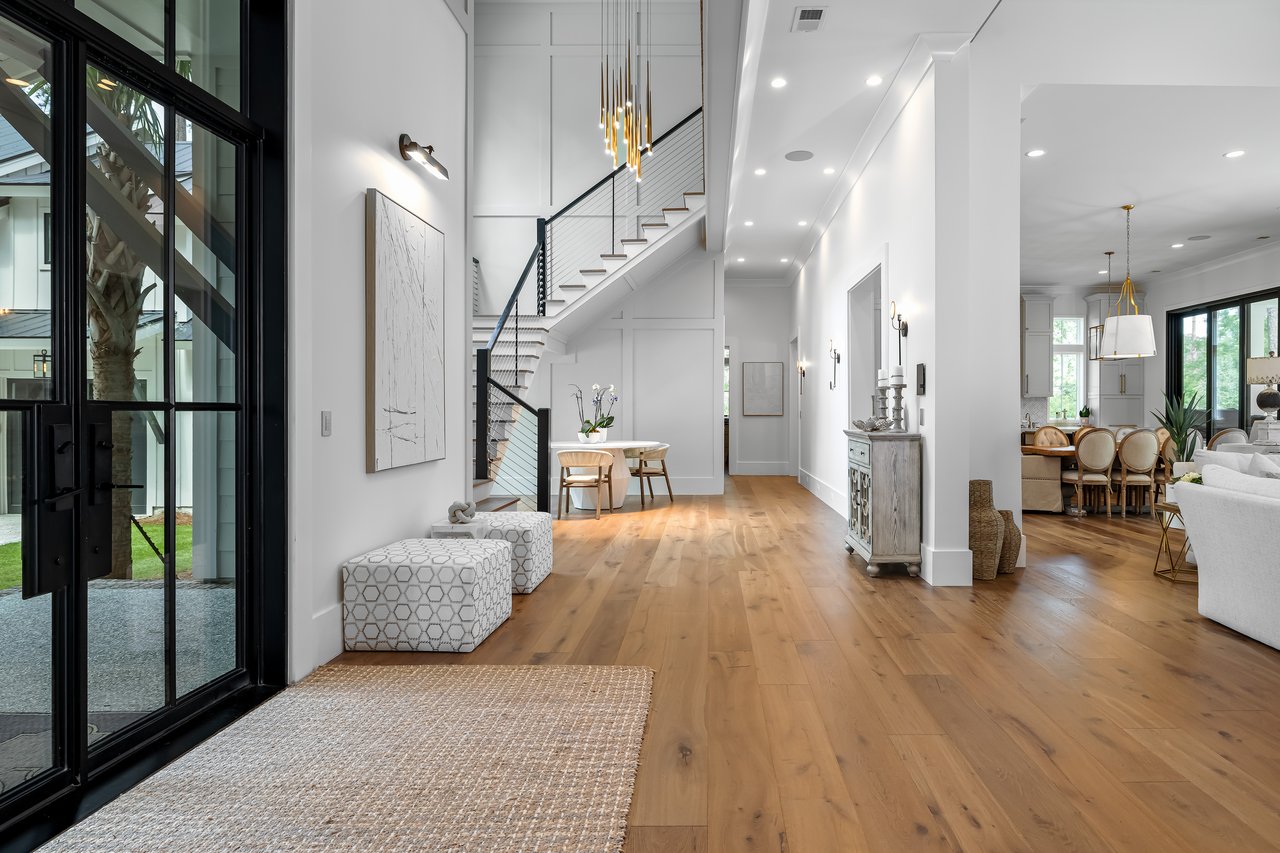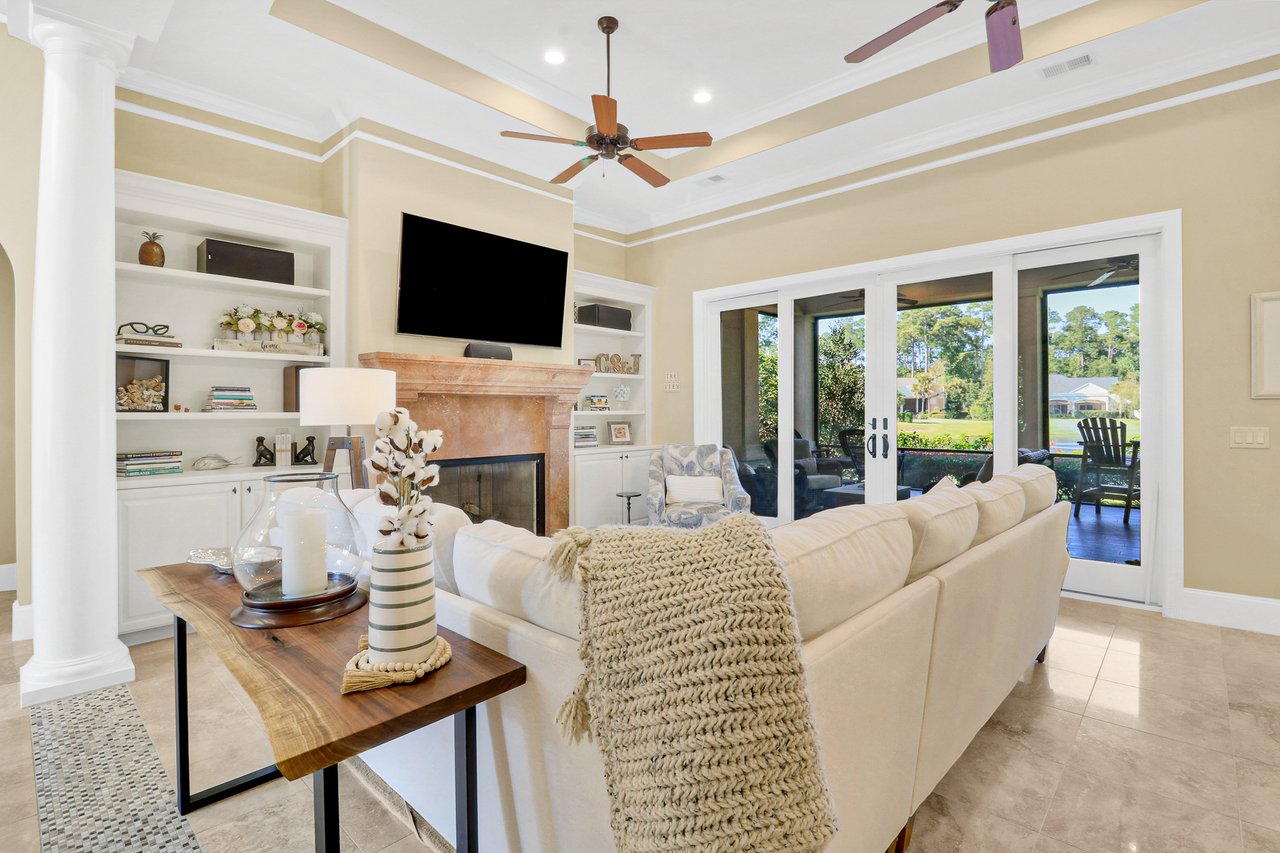
If you are weighing a Berkeley Hall homesite against a resale home, the good news is that you are not deciding whether you get the club lifestyle. In Berkeley Hall, every one of the community’s 554 homes and homesites includes a Berkeley Hall family membership that transfers with sale or resale, so the real question is how you want to arrive there. If you want to balance customization, timing, cost, and certainty in one of Bluffton’s most established private communities, this guide will help you sort the tradeoffs clearly. Let’s dive in.
What makes Berkeley Hall different
Berkeley Hall is a private Bluffton community in Beaufort County on the Okatie River, with a relatively limited number of homes and homesites. The club’s amenity base is broad, including two Tom Fazio courses, a 35,000-square-foot clubhouse, a 33-acre learning and practice facility, a 14,500-square-foot spa and fitness center, and River Park with 10 miles of nature trails.
That matters because your decision is less about access and more about how you want to live in the community from day one. Whether you buy a completed home or purchase a homesite to build, you are buying into the same overall amenity ecosystem.
Homesite vs resale at a glance
Both paths can work well in Berkeley Hall, but they fit different priorities. A homesite gives you more control over the final product, while a resale home gives you more certainty about what you are getting and when you can enjoy it.
Option | Best for | Main upside | Main tradeoff |
|---|---|---|---|
Homesite | Buyers who want customization | Control over layout, placement, and finishes | Longer timeline and more moving parts |
Resale home | Buyers who want speed and clarity | Faster occupancy and a finished setting | Less personalization |
Middle path | Buyers who want some customization without a full ground-up process | Faster start with reduced uncertainty | Fewer design changes than a true custom build |
Why choose a Berkeley Hall homesite
If your top priority is creating a home around your exact preferences, a homesite can be the right choice. Building custom typically gives you more say over floor plan, finishes, outdoor living, and how the home sits on the lot.
That can be especially appealing in Berkeley Hall, where homesites may offer waterfront, golf, or wooded settings with generous setbacks. In a community where view corridors, orientation, and outdoor living matter, controlling placement can be a real advantage.
Customization is the biggest benefit
A new custom home lets you shape the spaces you use most. You may be able to prioritize features such as first-floor living, a larger kitchen, a specific porch layout, or a more open indoor-outdoor connection.
Newer construction can also bring practical benefits. In general, custom builds may offer more current floor plans, newer materials and systems, lower utility costs tied to newer codes and energy-efficient products, and fewer major maintenance issues in the early years.
Some homesites may shorten the timeline
Not every homesite starts from zero. Berkeley Hall’s current inventory has included shovel-ready homesites with ARB-approved plans, along with lots described as ARB approved and permit ready.
That creates an appealing middle ground. If you want a newer home and a more efficient path to construction, a homesite with approvals already in place may reduce some of the design and review time.
You should expect more complexity
The tradeoff is time, coordination, and carrying cost. Custom building often involves higher upfront costs, special financing such as a construction loan, architect and material expenses, and a longer runway before move-in.
Current consumer guidance says the design phase often takes three to six months, followed by approvals and permits, while construction itself typically lasts at least 12 to 16 months. Delays can extend that timeline further.
What the build process involves in Beaufort County
Before construction begins, Beaufort County requires a zoning permit. That process includes items such as a site plan showing setbacks, plus a septic permit or sewer connection and a 911 address.
After that, a building permit application requires contractor information and plan sets that include HVAC, plumbing, electrical, and RES-check documents. In a coastal setting like Berkeley Hall, flood-zone review through Beaufort County and FEMA also plays into siting and long-term carrying costs.
Budgeting beyond the home itself
When you compare building to buying resale, it helps to look beyond the base construction number. Your monthly ownership costs can include property taxes, insurance, flood insurance where applicable, HOA fees, maintenance, repairs, and utilities.
Tax classification also matters in Beaufort County. The county auditor states that legal residence is taxed at 4 percent, while non-primary or secondary residence property is taxed at 6 percent.
Why choose a Berkeley Hall resale home
If you want a more direct path into the community, a resale home often makes the most sense. Existing homes are typically move-in ready, which means you can start enjoying the property and club lifestyle much sooner.
Resale also gives you something many buyers value highly: certainty. You can walk the finished property, evaluate the privacy, see the landscape maturity, and understand the outdoor living areas before you close.
You can evaluate the exact setting
In Berkeley Hall, this is a meaningful benefit. Because views, lot orientation, and outdoor setting are part of the value proposition, being able to assess the final result in person can reduce guesswork.
With a completed home, you know how the home sits on the lot. You can see the natural light, the relationship to neighboring properties, and how landscaping shapes privacy and curb appeal.
Resale does not always mean older
One common misconception is that resale equals dated inventory. In Berkeley Hall, the current property search includes completed homes from a range of years, including 2014, 2022, and 2024.
That means the resale path may include near-new options, not just older homes. For some buyers, a newer resale home offers the best mix of modern construction, immediate use, and lower execution risk.
Resale may still require updates
The tradeoff is that you may not get every feature on your wish list. Existing homes can come with older finishes, different floor-plan choices, or systems that are not as current as a brand-new custom build.
Still, some buyers prefer to make selective cosmetic updates over time rather than take on the full process of designing and constructing a home from scratch. That approach can work especially well if the lot, setting, and layout are already strong.
The middle path: near-new or permit-ready options
For many Berkeley Hall buyers, the best answer is not purely homesite or purely resale. The community’s current inventory shows examples on both sides that blur the line.
A shovel-ready homesite with ARB-approved plans can remove some of the early uncertainty that comes with a true custom start. On the other side, a newer completed home may deliver modern design and systems without requiring you to manage permits, build schedules, and contractor coordination.
This middle path is worth serious consideration if you want efficiency without giving up too much quality or design appeal. In a market like Berkeley Hall, those hybrid opportunities can be especially valuable.
How to decide which path fits you
If you are still unsure, start by ranking your priorities. Most buyers in Berkeley Hall are deciding among four big variables: customization, speed, budget structure, and tolerance for uncertainty.
Here is a simple way to think about it.
A homesite may fit you best if:
- You want to control layout, finishes, and site placement
- You care deeply about creating a long-term custom home
- You are comfortable with approvals, permits, and construction timelines
- You can carry the property through the build process
A resale home may fit you best if:
- You want to move more quickly
- You prefer to evaluate the finished home, view, and landscaping before buying
- You want fewer moving parts after closing
- You are open to making smaller updates instead of building from the ground up
A middle-path option may fit you best if:
- You want a newer end product with less uncertainty
- You are interested in ARB-approved or permit-ready homesites
- You want modern construction but do not want a full custom timeline
- You would consider a near-new completed home
One Berkeley Hall advantage buyers should not overlook
If you decide to build, Berkeley Hall offers a practical bridge that many private communities do not. The club says buyers can stay in one of 20 fully furnished Golf Cottages while their custom home is under construction, then convert from Signature to Equity membership when they close on the new home.
For out-of-area buyers or anyone relocating on a flexible schedule, that can make the custom-build path far more workable. It gives you a way to spend time in the community while your home is taking shape.
The right choice depends on how you want to live
In Berkeley Hall, there is no one-size-fits-all answer. If you want the most personalization and are comfortable with a longer process, a homesite can be a strong fit. If you want speed, clarity, and a finished setting you can evaluate before closing, a resale home may be the smarter move.
In many cases, the best opportunity sits in the middle, especially when a homesite already has approvals in place or a completed home offers near-new condition. With the right local guidance, you can compare those options clearly and make a decision that supports both your lifestyle and your timeline.
If you are considering Berkeley Hall and want a calm, informed view of current homesites, resale opportunities, and off-market possibilities, Ussery Group can help you evaluate the path that fits you best.
FAQs
Should you buy a homesite or resale home in Berkeley Hall?
- A homesite is usually better if customization and long-term design control matter most to you, while a resale home is often better if you want faster occupancy and more certainty about the final product.
How long does a custom build in Berkeley Hall usually take?
- Current guidance says design often takes three to six months, and construction typically takes at least 12 to 16 months, with additional time possible for approvals, permits, and delays.
Are there Berkeley Hall homesites with plans already approved?
- Yes. Berkeley Hall’s inventory has included homesites described as shovel-ready, ARB approved, or permit ready, which can shorten the timeline to groundbreaking.
What costs should you budget for on a Berkeley Hall homesite?
- In addition to construction, you should account for property taxes, insurance, flood insurance where applicable, HOA fees, maintenance, repairs, utilities, permitting, and site-related requirements.
Are Berkeley Hall resale homes always older properties?
- No. Berkeley Hall’s current property search includes completed homes from a range of years, including newer homes, so the resale category may include near-new options as well.
Can you stay in Berkeley Hall while your home is being built?
- Yes. Berkeley Hall says buyers may stay in one of its fully furnished Golf Cottages during the construction process.