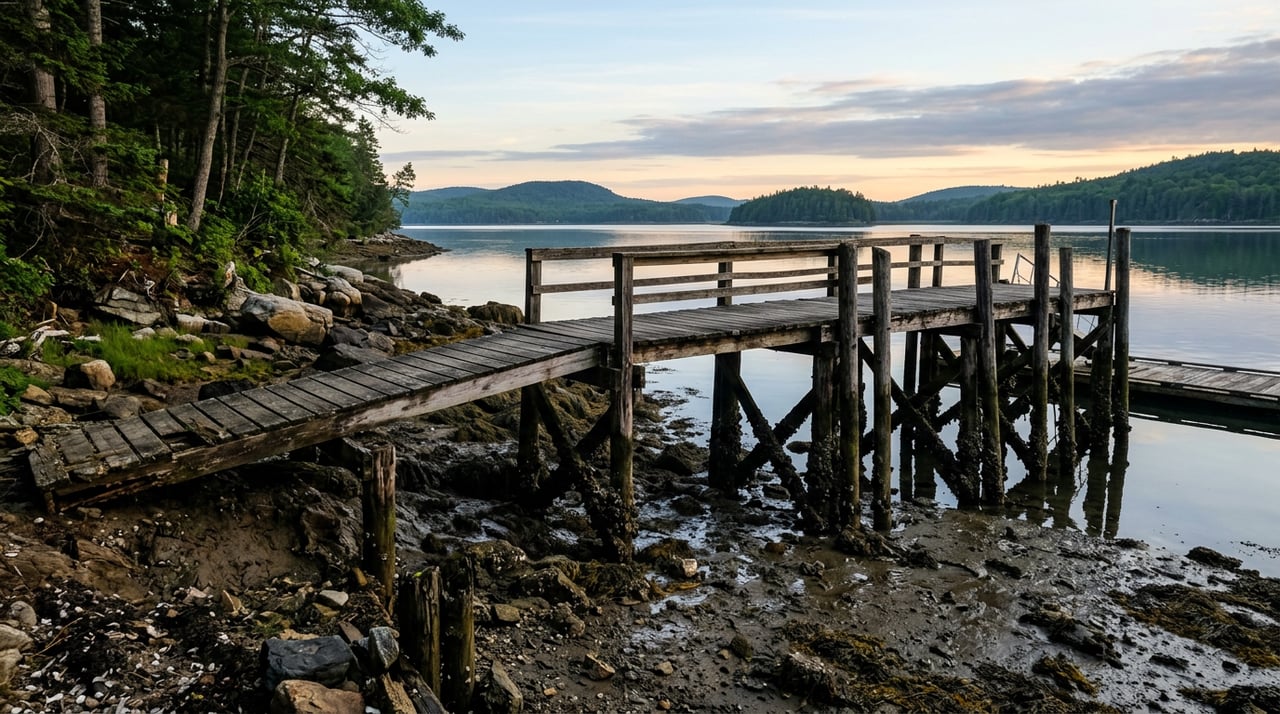
Most people who own a dock on the May River think of the tide as scenery. It rises, it falls, the water goes from full to a stretch of gleaming pluff mud, and eventually it comes back. What that same tide is actually doing, a few bends downriver from Gascoigne Bluff, is running a business that has operated on this water since before most of the neighborhood's homes existed.
That business is the Bluffton Oyster Company, and every September it starts its season over again. If you live on this stretch of the May River, that reset matters more than it looks like it should, because the same water moving past your own private dock is the water the oyster pickers are reading to decide when to leave.
A River That Doesn't Check a Watch
Gascoigne Bluff sits west of Highway 46 and Buckwalter Parkway, a gated enclave of large-acreage homesites, some locals call them mini-farms, built around a shared 240-acre common area used for riding trails and outdoor recreation. Homes here have gone up gradually since the late 1970s, many of them with private docks on the May River itself. It reads, from the road, like a quiet horse property. From the water, it's part of a working tidal system that a commercial fishing operation still depends on for its livelihood.
That distinction shows up in the schedule. The Bluffton Oyster Company sends its pickers out to harvest oysters straight off the river's natural beds, and they leave the dock anywhere from four in the morning to six in the evening depending on the tide, not the sunrise, not a shift change, the tide. Back at the dock, a crew of shuckers, women who range in age from their forties to their eighties, generally start around four thirty in the morning and work until early afternoon, their hours set by how much came in that day. Nobody in that operation is checking a calendar. They're checking water.
What Restarts Every September
The oyster company carries local May River oysters, clams, and mussels from September through May, which means the season most visible on this stretch of river is only just beginning. For a Gascoigne Bluff resident, that's the difference between a summer river that mostly carries boat traffic and a fall and winter river that carries working boats again, moving on a schedule dictated by low water and high water rather than daylight.
It isn't only oysters. The same waterway runs a rougher calendar underneath it: a short window in early April, usually about two weeks, when soft-shell blue crabs are running as females molt after winter, then a roe shrimp season that opens in May or June once biologists confirm enough spawning has happened, followed by brown shrimp through the summer and the fall white shrimp run that's typically the biggest catch of the year outside of a hard winter. None of it is decorative. It's the same river your dock sits on, doing what it has done for generations, whether or not anyone in a waterfront home happens to be watching.
The Town of Bluffton took a direct hand in keeping that visible. In 2001, the town bought the property that's now Oyster Factory Park specifically to preserve public river access and protect the oyster industry from redevelopment pressure. The park still surrounds the working oyster house today, complete with a boat ramp, a public dock, fire pits, and the Garvin-Garvey Freedman's Cottage standing as the site's oldest structure. It is one of the few stretches of the May River where the working river and the recreational one occupy the same few hundred feet of shoreline without either one pretending the other isn't there.
The Same Tide Runs Your Dock
Here's the part that actually matters if you own waterfront in Gascoigne Bluff rather than just admire it from a car window. The tidal mechanics that dictate when the oyster company's pickers can leave the dock are the same mechanics working under your own pilings. At high tide, floating docks rise to meet fixed piers and the water looks generous and forgiving. At low tide, the exposed oyster beds and soft pluff mud that make this river valuable to a working fishery are the same conditions that can strand a kayak launch or leave a stretch of your own dock sitting well above the waterline.
That's not a caution meant to keep anyone off the water. It's local knowledge worth having before a first paddle or an early boat trip. The people who work this river treat it as what it is, a living salt marsh estuary rather than a fixed shoreline, and anyone launching a kayak or paddleboard from a private dock nearby benefits from the same instinct: check the tide table before you check the clock.
Evenings carry their own version of the same lesson. Within roughly forty five minutes of sunset, no-see-ums intensify noticeably along marsh grass and low airflow pockets near the water, more so on humid, still evenings or just after rain. It's a small, practical thing to know if you're planning a dusk sit on your own dock rather than a hard rule, but it's the kind of detail that only shows up after a season or two of actually living on this water instead of just owning frontage on it.
What's Within Reach When You Come In
The upside of sharing a tidal system with a working oyster house is that the same three miles that separate Gascoigne Bluff from Old Town Bluffton put you close to where that catch actually turns into a meal. A short drive gets you to Sippin' Cow Café & Grill, Squat 'n' Gobble, the Old Town Dispensary, Bluffton Seafood House, and May River Grill, each within a few miles of the gate. None of it requires leaving the quiet of a gated, low-density neighborhood behind for long. It's close enough to be part of an ordinary week, not a special occasion.
That proximity is easy to take for granted until you notice what it actually is: a private, horse-friendly enclave sitting a few minutes from one of the last continuously operating commercial oyster shucking houses in South Carolina, on the same river, subject to the same tide. Gascoigne Bluff's quiet comes from its size and its gate. Its character comes from what's happening in the water just past the dock, whether or not anyone in the neighborhood happens to be watching that particular morning.
Living With the Tide, Not Just Beside It
None of this changes what Gascoigne Bluff is on paper, a private community built around acreage, riding trails, and river frontage. What it changes is how a resident might read that frontage. A dock here isn't a static amenity. It's a working relationship with a tidal river that has supported a commercial fishery for generations and still does, right now, this month, as the oyster season starts back up downriver.
Knowing the tide table the way the oyster pickers do won't change your property taxes or your HOA dues. It will change whether your boat is sitting in six feet of water or resting on mud the next time you walk down to the dock. On the May River, that's the kind of detail worth knowing before you need it.
If you ever want to talk about what it actually means to live on this stretch of river, tides, docks, and all, the team at Ussery Group spends enough time in Gascoigne Bluff and along the rest of the May River to have opinions worth hearing, whether or not you're buying or selling anything at all.